
You finally hired someone. The background check is in motion, the start date is set, and the toddler room has been running one person short for weeks. It’s tempting to hand your new teacher a binder, walk them to the classroom, and hope for the best.
Most directors know how that can end. A new teacher who feels lost in week one may be gone by month three, and you’re posting the job again. This guide shows how to onboard new childcare teachers with a plan that covers compliance, safety, classroom practice, and belonging across a full 90 days.
Why You Need a Plan for How to Onboard New Childcare Teachers
Directors feel staff turnover every day: hiring gaps, overtime, and experienced teachers stretched thin covering open shifts. That makes the first few weeks a retention window, not just a paperwork window.
A strong onboarding plan does four things:
- Keeps you compliant with licensing, health, and safety rules before a new hire is in ratio.
- Builds classroom confidence so the teacher knows the routines, the children, and the curriculum.
- Creates connection with a mentor and the wider team.
- Sets clear growth expectations for the first 30, 60, and 90 days.
It also supports more consistent care. Children and families notice when the adults in the room are calm, prepared, and following the same routines.
This guide covers the whole new-hire journey. If you’re specifically training staff on a curriculum platform, our article on moving from paper curriculum to digital in childcare goes deeper on that piece.
Knowing how to onboard new childcare teachers well is one of the cheapest ways to hold on to the people you just hired.
Before Day One: Compliance Paperwork and Pre-Boarding

The work starts before your new teacher walks through the door. Use the time between the offer and the start date to clear the compliance items that would otherwise eat up their first week.
Clearances and records
- Confirm background checks are cleared and filed before the new teacher is ever alone with children.
- Collect the health clearances and any immunization or TB documentation your state requires.
- Verify CPR and Pediatric First Aid certification. If it’s missing or expiring, schedule the training now.
State-specific requirements
Pre-service training hours and documentation rules vary from state to state, and they change. Child care staff orientation requirements, including required topics and hours, differ by state, so confirm them before the start date.
Directors working out how to onboard new childcare teachers in California, for example, should confirm requirements directly with the state’s Community Care Licensing Division. If your program accepts subsidies, ask your licensing consultant which health and safety topics must be completed before or shortly after hire.
Send materials early
Share digitally:
- Your employee handbook
- The daily schedule for their classroom
- Basic roster information (first names, ages, and any allergy or care plans they need to know)
- A short glossary of the acronyms your center uses every day
A handbook read at home, at their own pace, sticks better than one skimmed during a busy orientation.
Prepare the classroom
Set out a labeled cubby, basic supplies, a printed copy of the daily schedule, and a short personal welcome note. Small touches tell a new teacher they were expected and wanted.
Your Childcare Onboarding Checklist
Use this childcare onboarding checklist to give every item an owner and a target window. Keep the checklist digital so it’s easy to update and quick to pull up during a licensing visit.
| Category | Item | Owner | When |
|---|---|---|---|
| Paperwork and Clearances | Background check cleared and filed | Director | Pre-boarding |
| Paperwork and Clearances | Health and immunization records on file | New hire / Director | Pre-boarding |
| Health and Safety Training | CPR and Pediatric First Aid verified | Director | Pre-boarding |
| Health and Safety Training | Emergency procedures walkthrough | Director | Week 1 |
| Health and Safety Training | Safe sleep, medication, and allergy procedures | Director / Mentor | Week 1 |
| Policies and Handbook | Handbook reviewed and signed | New hire | Week 1 |
| Policies and Handbook | Behavior guidance policy reviewed | Mentor | Week 1 |
| Classroom Readiness | Shadowing and co-teaching shifts | Mentor | Week 1 to Day 30 |
| Classroom Readiness | First independent lesson plan | New hire | By Day 30 |
| Family Communication | Drop-off, pick-up, and daily report training | Mentor | Week 1 |
| Family Communication | First supervised family conversations | Mentor | By Day 30 |
| Mentoring and Check-ins | Buddy assigned | Director | Day 1 |
| Mentoring and Check-ins | 30-day check-in | Director | Day 30 |
| Mentoring and Check-ins | 60-day observation and feedback | Director | Day 60 |
| Mentoring and Check-ins | 90-day review and growth goals | Director / New hire | Day 90 |
Week One: A Day-by-Day Orientation Schedule
A good new teacher orientation spreads training across the first five days instead of one long session. Nobody remembers a policy they read on page 47 of a binder at 4:30 p.m.
| Day | Focus | What happens | Who leads |
|---|---|---|---|
| 1 | Safety and the building | Facility tour, exits, evacuation and shelter-in-place routes, first-aid kits, clock-in, meet the mentor | Director |
| 2 | Routines and behavior guidance | Daily schedule, transitions, behavior policy; mentor models a tricky transition | Mentor |
| 3 | Families | Drop-off, pick-up, daily reports, sample parent messages | Mentor |
| 4 | Health and hygiene | Diapering, handwashing, sanitizing, allergy and medication rules, safe sleep (infant rooms) | Director / Mentor |
| 5 | Co-teaching | Co-teach part of the day, first planning session, director check-in | Mentor / Director |
Age-Specific Orientation: Infant, Toddler, and Preschool Rooms
A teacher joining the infant room needs a different week than one joining Pre-K. Tailor the back half of orientation to the age group.
| Room | Focus in week one | Have ready |
|---|---|---|
| Infant | Safe sleep, feeding logs, responsive caregiving, each baby’s routine | Infant curriculum, individual care plans |
| Toddler | Development from about 18 months to 2 years, short activities, big feelings and transitions | Toddler lesson plans |
| Preschool | School readiness, early literacy, language-rich teacher talk, STEM for ages 3 to 5 | Lessons mapped to state early learning standards |
Teachers in the infant and toddler rooms should also read our guide to positive guidance strategies for infant toddler classrooms before their first solo shift.
This is where a developmentally sequenced curriculum earns its keep. When new teachers open lessons already matched to their age group, they spend week one learning the children, not hunting for daycare activities.
Pairing New Teachers With a Mentor or Buddy
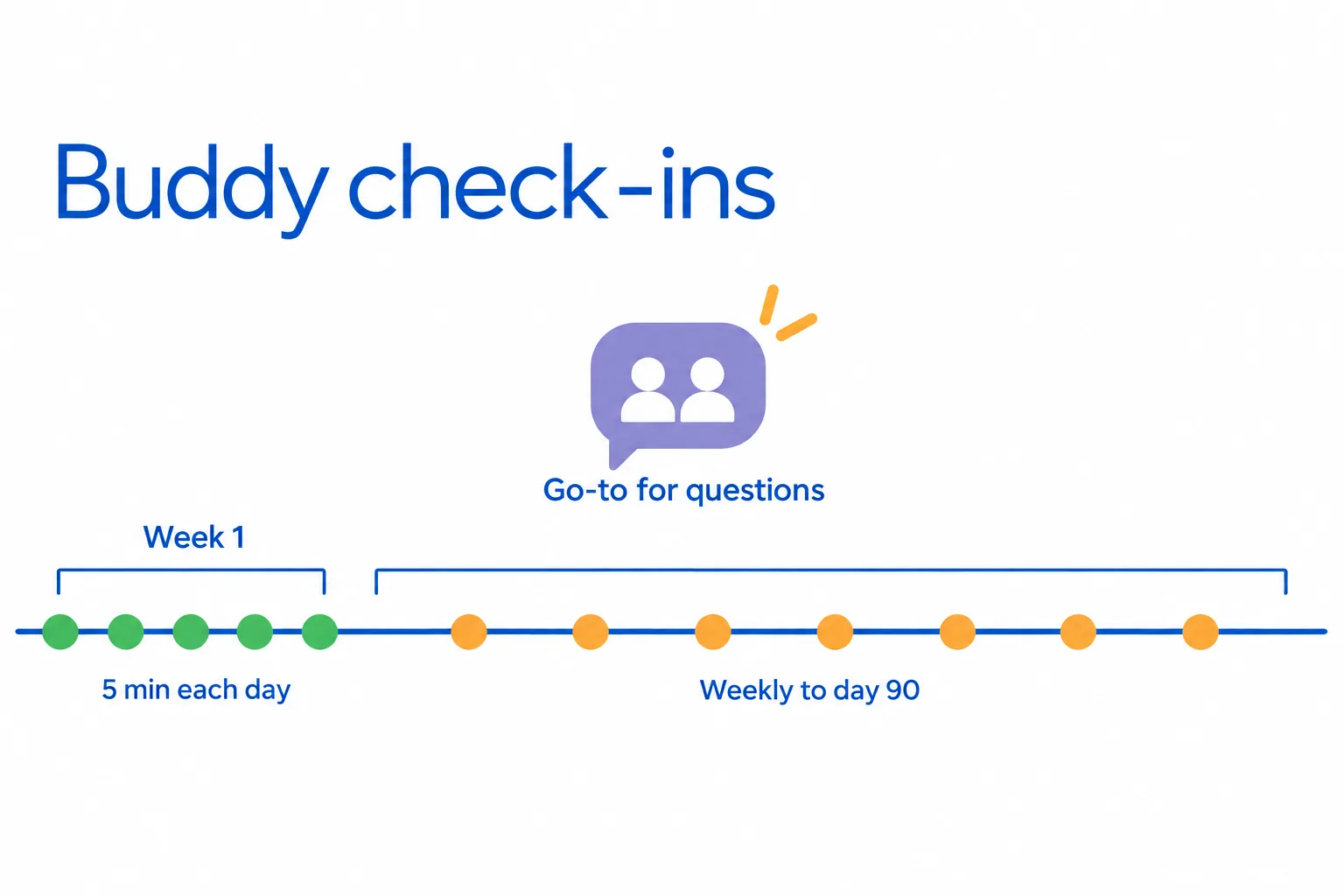
Even a simple early childhood teacher mentor program works if the buddy has set check-ins and protected time. Choose someone patient, encouraging, and good at explaining the “why” behind routines. That isn’t always your most senior teacher.
Define the role clearly:
- A five-minute check-in at the end of each day during week one
- A weekly check-in after that through day 90
- The go-to person for questions a new hire may not feel comfortable asking the director
Then protect the mentor. Give them time in the schedule and recognize their work publicly. Mentoring shouldn’t quietly add to someone else’s burnout.
Human mentors can’t be available every minute, though. That’s one reason Learning Beyond Paper built ELBY, a virtual instructional coach, right into the platform. When a new teacher wonders how to adapt an activity or extend a lesson during naptime planning, they can ask in the moment instead of waiting for their buddy’s next break.
The 30-60-90 Day Integration Plan
Onboarding doesn’t end on Friday of week one. Use this new hire first week checklist for daycare to keep each day focused and hands-on.
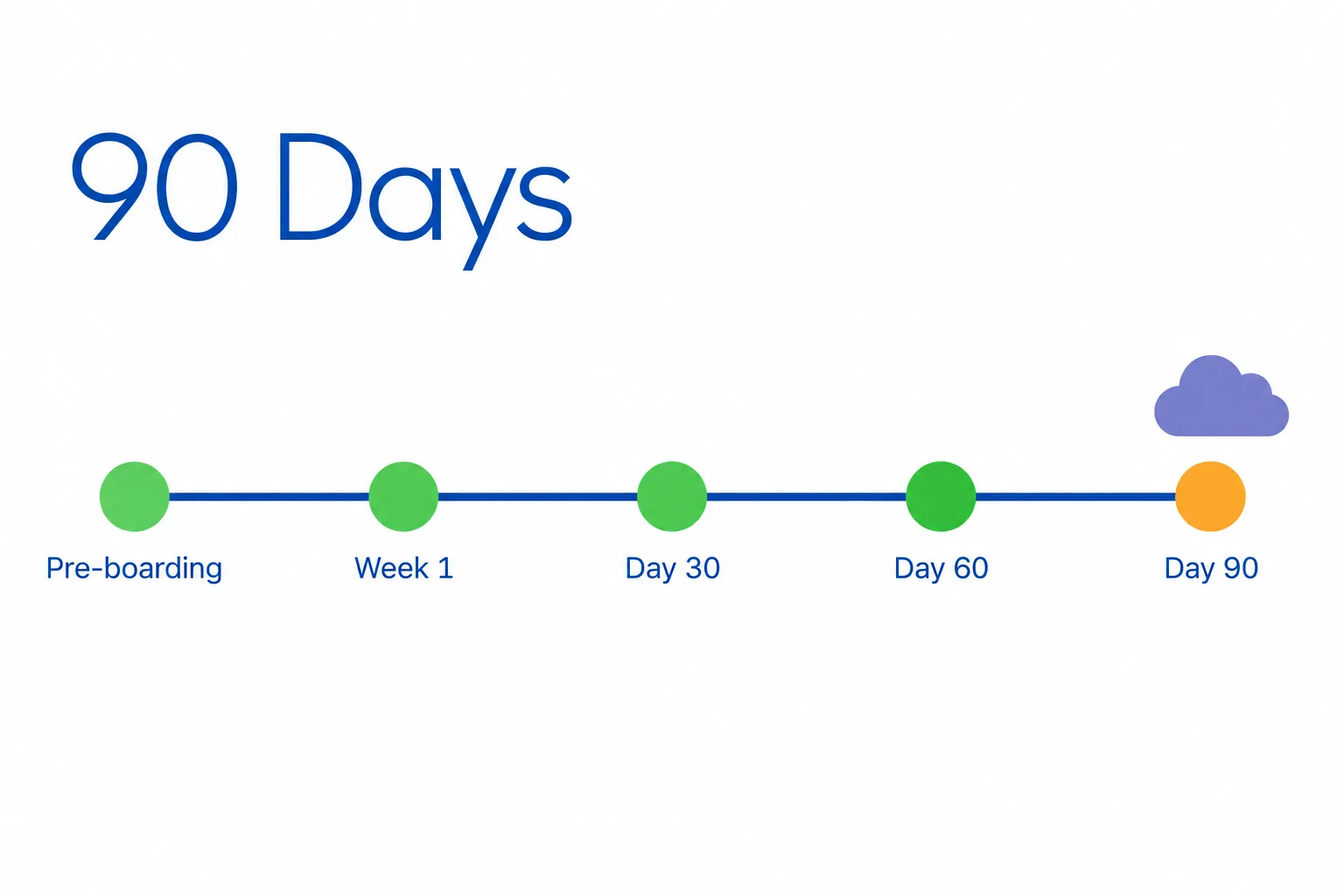
A 30-60-90 day plan for new teachers gives them a clear path and gives you natural points to catch problems early.
| Phase | New teacher’s role | Milestones | Director check-in |
|---|---|---|---|
| Days 1-30 | Learn and co-teach | Compliance complete, routines learned, first supported family interactions | 30-day check-in |
| Days 31-60 | Lead with support | Leads parts of the day, first observation with feedback, PD pathway started | 60-day observation and feedback |
| Days 61-90 | Own the classroom | Runs the room day to day, sets growth goals, two-way fit conversation | 90-day review |
Use observation language that matches CLASS-style interactions, such as how the teacher supports concept development or responds to children’s cues, so expectations stay consistent from one review to the next.
The professional development timeline is often the piece that slips. Learning Beyond Paper includes 49.5 hours of embedded professional development through LBP University in every subscription, with built-in onboarding and short courses that fit around a teacher’s schedule.
Programs working with workforce boards and early learning initiatives in Texas use the same approach to build teacher capacity without adding scheduling headaches.
Onboarding in Head Start and Standards-Driven Programs
If you run a Head Start program, introduce new staff to the Early Learning Outcomes Framework (ELOF) early. Lesson planning, observation, and documentation make far more sense once a teacher understands the framework behind them.
A Head Start-aligned curriculum shortens that learning curve, because new teachers see the ELOF connections inside each lesson instead of cross-referencing them by hand. For a deeper look, read our guide on how to align daycare curriculum with Head Start ELOF.
Building Belonging: Culture, Core Values, and Appreciation
People stay where they feel they belong. Make your culture visible from the first day.
- Turn core values into behaviors. “Respect for families” might mean greeting every parent by name at pickup. “Teamwork” might mean no one leaves a messy room for the next shift.
- Plan first-week welcomes. Staff introductions at a morning huddle, a welcome card signed by the team, or lunch with the director all go a long way.
- Include everyone. Part-time staff, floaters, and evening teams deserve the same onboarding, even if it’s spread across different shifts. For bilingual staff, offer materials in English and Spanish where possible.
- Celebrate early wins. When a new teacher handles a tough transition well, say so out loud.
Common Onboarding Mistakes Directors Can Avoid
- Putting a new hire in ratio before training is complete. It’s tempting when you’re short-staffed, but it puts children and your new teacher at risk.
- Cramming everything into one orientation day. Spread it across the first week and the first 90 days.
- Assigning a buddy without time or guidance. A mentor without protected time is just another overworked teacher.
- Leaving new teachers with blank pages or outdated paper binders. Planning from scratch is a fast route to early burnout.
- Skipping the 30-60-90 check-ins when it gets busy. These conversations are often where you catch a problem before it becomes a resignation.
Frequently Asked Questions
Related readingHow to Onboard Teachers on New Digital CurriculumRead the guide →Frequently asked questions
What are the 5 C’s of onboarding?
How do you onboard new childcare teachers?
What are the steps involved in onboarding new teachers?
What is the 70/30 rule in teaching?
What are the 5 C’s for teachers?
How long should childcare teacher onboarding take?
See How Learning Beyond Paper Supports New Teachers From Day One
If you’re hiring ahead of fall enrollment, a clear process for how to onboard new childcare teachers pays off fast, and the right tools make it easier to run.
With Learning Beyond Paper, new teachers open one app and find ready-to-use lesson plans for every age group from Infant through Pre-K 4, bilingual English and Spanish content, embedded professional development, and ELBY, a virtual instructional coach for in-the-moment questions.
Setup is instant, with no hardware required, and it costs far less than replacing paper curriculum kits. That means less time on paperwork for you, and more time mentoring your newest teachers.
Curious how it would work in your center? Watch the demo or start a free trial and try it in your own classrooms.